


The Importance of Leadership in Crisis Management
What You Will Learn In This Article:
Why leadership is crucial for facility managers during a crisis.
How to proactively prepare your property and community for emergencies.
Strategies for effective communication and decisive action when a crisis strikes.
The importance of post-crisis debriefing and rebuilding trust.
How to turn challenges into opportunities for growth and resilience.
Crisis Leadership: A Facility Manager’s Guide
For facility managers, a crisis is not a theoretical concept—it's a very real possibility. A burst pipe on the 10th floor, a fire in a residential unit, a widespread power outage, or a major security incident can disrupt operations, endanger occupants, and expose your property to significant liability. While a solid emergency plan is your foundation, it is the quality of your leadership during these critical moments that will ultimately define the outcome.
In a crisis, a facility manager is more than just an administrator; you are the calm voice, the decisive force, and the protector of your community. Your ability to lead effectively can prevent panic, minimize damage, and guide your property and its occupants through to recovery.
Phase 1: Proactive Leadership (Before the Storm)
The most effective crisis management happens before a crisis ever occurs. As a leader, your first job is to ensure a state of constant preparedness.
Create a Property-Specific Crisis Plan: This plan should be your playbook. It needs to include more than just a list of emergency numbers. Outline specific protocols for different scenarios: a building-wide evacuation plan, a water damage response protocol, and a clear communication strategy for tenants and staff. Ensure all staff members know their roles and responsibilities.
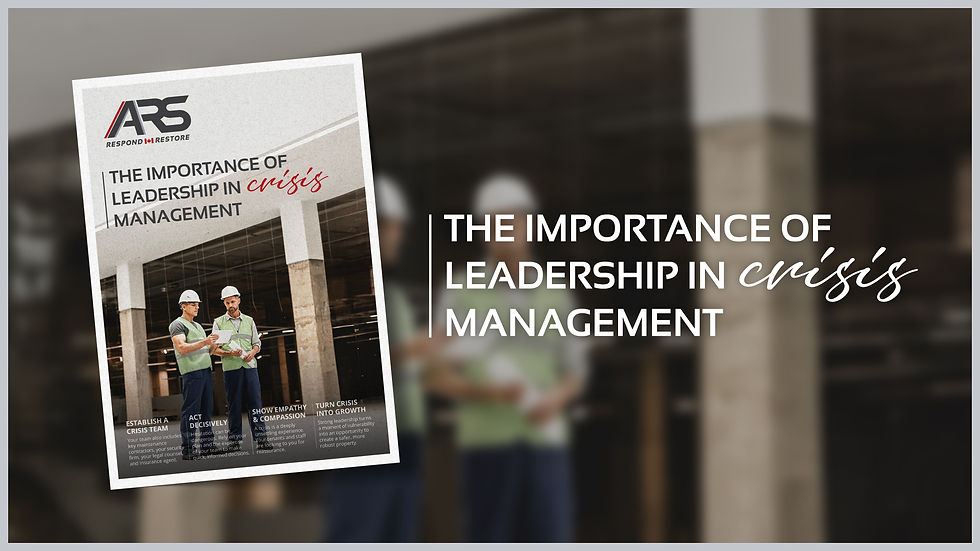
Establish a Crisis Team: Your team is not just your on-site staff. It also includes key maintenance contractors, your security firm, your legal counsel, and insurance agent. Designate a lead for each area and empower them to act quickly when needed.
Educate and Equip Your Community: A prepared tenant is a safer tenant. Clearly communicate emergency procedures through welcome packets, newsletters, and regular reminders. Conduct fire drills and test your communication systems (e.g., text alerts, email blasts) to ensure they work when you need them most.

Phase 2: Leading Through the Crisis (The Action Phase)
When an event happens, your leadership must be immediate, visible, and reassuring.
Communicate with Confidence and Transparency: In the vacuum of a crisis, rumors and misinformation spread like wildfire. Be the first to communicate and the primary source of truth. Even if you don't have all the answers, a short, honest message acknowledging the situation and outlining the steps being taken is far better than silence. Use all available channels—text alerts, email, and social media—to keep everyone informed.
Act Decisively: Hesitation can be dangerous. Rely on your plan and the expertise of your team to make quick, informed decisions. This might involve authorizing an emergency repair without multiple quotes, securing a damaged area immediately, or coordinating with first responders.
Show Empathy and Compassion: A crisis is a deeply unsettling experience for everyone involved. Your tenants and staff are looking to you for reassurance. A simple, empathetic message like, "We are aware of the situation and are working tirelessly to resolve it. Your safety is our top priority," can go a long way in calming fears and building trust.

Phase 3: Post-Crisis Leadership (Rebuilding and Learning)
Your work does not end when the immediate threat is over. The recovery and rebuilding phase is just as important.
Conduct a Thorough Debriefing: Once the dust settles, gather your team and contractors for a detailed review. What parts of the plan worked? Where did you face unexpected challenges? This "after-action review" is a crucial opportunity to refine your plan and build greater resilience.
Rebuild Trust Through Accountability: Be transparent with your community about what happened and the steps you're taking to prevent a recurrence. Share a timeline for repairs, explain the insurance claim process, and demonstrate that you are taking full responsibility for improving the property's safety.
Turn Crisis into Growth: Every crisis is a lesson in resilience. Use this experience as a catalyst for positive change. A power outage might lead to the installation of a backup generator, and a security incident might prompt an upgrade to the camera system. Strong leadership turns a moment of vulnerability into an opportunity to create a safer, more robust property.
In the end, a crisis is the ultimate test of a facility manager's leadership. It's the moment when your foresight and preparation prove their worth, and your calm, decisive action becomes the anchor for your entire community. By leading with honesty and empathy, you not only protect your property and its occupants but also transform a moment of potential chaos into a powerful testament to your team's strength and the resilience of the community you serve.


Comments